

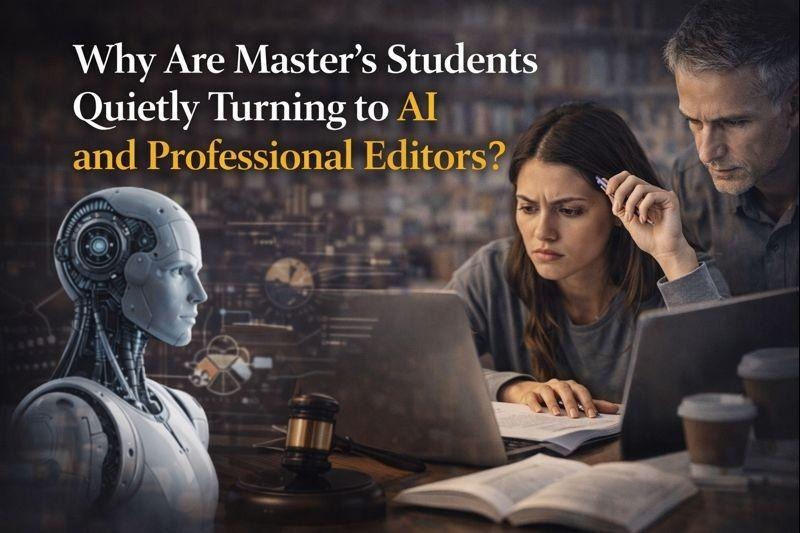

In the high-pressure environment of UK higher education, a quiet revolution is taking place within the walls of university libraries. From the historic cloisters of Oxford to the modern research hubs in Manchester, Master’s students are increasingly moving away from the “lone scholar” archetype. Instead, they are embracing a collaborative model of academic production that involves sophisticated AI tools and professional editorial support.
This shift isn’t about taking the “easy way out.” For a graduate student balancing a rigorous modular schedule, part-time work, and the escalating cost of living, the traditional academic journey can feel like an endurance test rather than an intellectual pursuit. In this landscape, the decision to seek expert essay writing help from established platforms like MyAssignmentHelp, which provide this service to help students refine their research and structure, has become a strategic necessity. By outsourcing the more mechanical or structural aspects of writing, students can protect their mental health while ensuring their work meets the exacting standards of the UK’s Research Excellence Framework.
The “Postgrad Shock”: Why the Leap is Harder Than Ever
Most students enter a Master’s program expecting a step up from their undergraduate days, but few are prepared for the sheer velocity of the curriculum. In the UK, a standard one-year Master’s requires a level of critical synthesis and “original contribution” that usually takes years to develop.
1. The Language of the “First”
To achieve a Distinction, a student must do more than just repeat facts. They must demonstrate a “critical ” voice—a specific way of arguing that is often poorly explained by university departments. For international students, this challenge is compounded by the nuances of British Academic English. The difference between a “good” essay and a “First-Class” essay often comes down to flow, signposting, and the sophisticated use of “hedging” language (e.g., using “it could be argued that” instead of “this proves that”).
2. The Dissertation Bottleneck
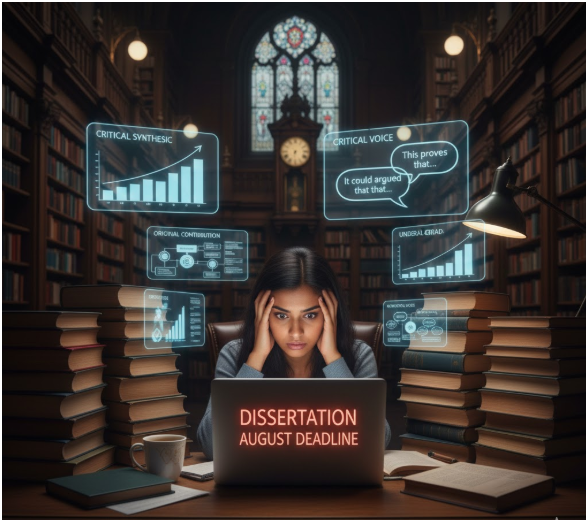
The final 15,000-word dissertation is where most students hit a wall. Staring at a blank screen while a deadline looms in August is a recipe for paralysis. This is where modern technology intervenes. While some purists remain skeptical, many students find that using a professional essay typer or an AI-driven outlining tool can be the spark needed to overcome writer’s block. When used responsibly to generate a skeletal structure or to brainstorm potential subheadings, these tools allow a student to move from “blank page anxiety” to “critical editing” much faster.
The Dual Rise of AI and Human Expertise
The trend we are seeing in 2026 is the “Hybrid Model.” Students are no longer choosing between doing it all themselves or “cheating.” Instead, they are acting as project managers of their own degrees.
Why AI Isn’t Enough
Generative AI, while powerful, has a distinct “tell.” It often lacks the cultural nuance of the UK academic system and can occasionally “hallucinate” citations. Master’s students, aware of the high stakes and the sophistication of modern Turnitin algorithms, know that AI-generated text is a risk. This is why the human element—the professional editor—remains indispensable.
- Subject Matter Expertise: An AI might know the definition of Macroeconomics, but a human editor with a PhD from a London university understands the specific debate your professor is looking for.
- Ethical Guardrails: Professional services focus on “Model Papers” or “Developmental Editing.” This means they provide a gold-standard template that the student then uses to write their own original work. It is a form of intensive tutoring that universities often don’t have the resources to provide on a one-to-one basis.
Questioning the System: Are Universities Failing Students?
One must ask: if so many students are turning to external help, is the problem with the students or the system?
UK universities have become increasingly commercialised. With larger class sizes, the time a supervisor can spend on a single student has dwindled. Many postgraduates report seeing their supervisors for only 15 to 30 minutes every few weeks. In that vacuum, professional academic support services have stepped in to provide the detailed, line-by-line feedback that was once the hallmark of the British tutorial system.
| Student Challenge | How Professional Support Helps | How AI Tools Help |
| Critical Voice | Editors teach how to “argue” rather than “describe.” | Suggests synonyms for better academic tone. |
| Referencing | Ensures perfect Harvard/OSCOLA/APA compliance. | Quickly formats bibliographies. |
| Structure | Helps align the paper with the specific marking rubric. | Creates logical outlines and “Essay Typer” drafts. |
| Deadlines | Provides a fast turnaround for feedback. | Accelerates the initial drafting phase. |
Navigating the Ethics: A Guide for Graduates
For a UK graduate student, the goal is to graduate with a degree that is both high-quality and ethically sound. Here is how to use these modern “study hacks” without crossing the line into academic misconduct:
- Use Services as a Blueprint: Treat a professionally edited paper as a “super-textbook.” Study how the arguments are linked and how the evidence is cited, then apply those lessons to your own writing.
- Verify Everything: If an AI tool suggests a fact or a citation, check it against the university library’s database. Never take an algorithm’s word for it.
- The “Voice” Test: Read your work aloud. If it doesn’t sound like you, it needs more of your own input. The best use of an editor is to make your voice clearer, not to replace it with theirs.
- Transparency with Supervisors: If you use a proofreader, ensure they follow the university’s “Proofreading Policy.” Most UK universities allow proofreading as long as the editor doesn’t change the actual content or arguments.
Conclusion: The New Academic Reality
The quiet shift toward AI and professional editing isn’t a sign of a “lazy” generation. Rather, it is an adaptation to a hyper-competitive, high-speed academic environment. By leveraging tools like essay help and structural assistants, UK Master’s students are reclaiming their time and focusing on what truly matters: understanding their subject deeply and preparing for their future careers.
About The Author
Alexander Andeerson is a senior academic consultant and education researcher specializing in postgraduate success strategies within the UK university system. With over a decade of experience helping students navigate the rigours of Master’s and PhD programs, Alexander provides actionable insights into academic writing and dissertation management. Currently, they contribute as an expert advisor for MyAssignmentHelp, where they lead initiatives on ethical academic support and student mental health.